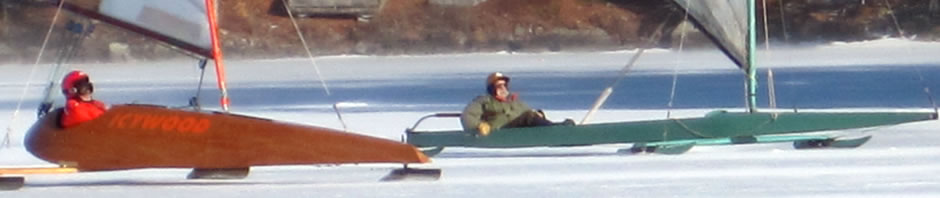
Damariscotta Sun> Mar. 3

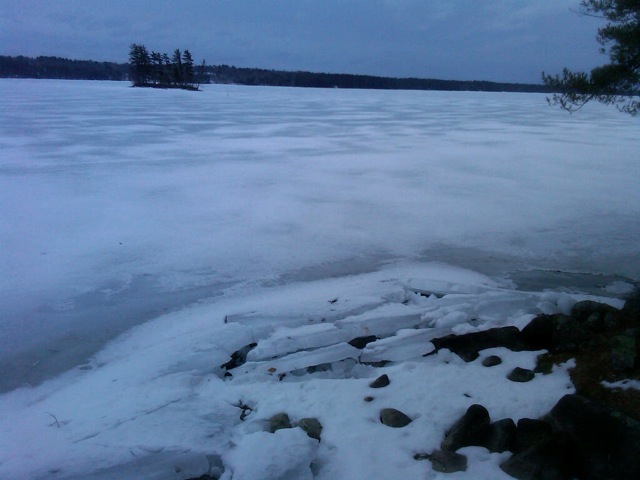
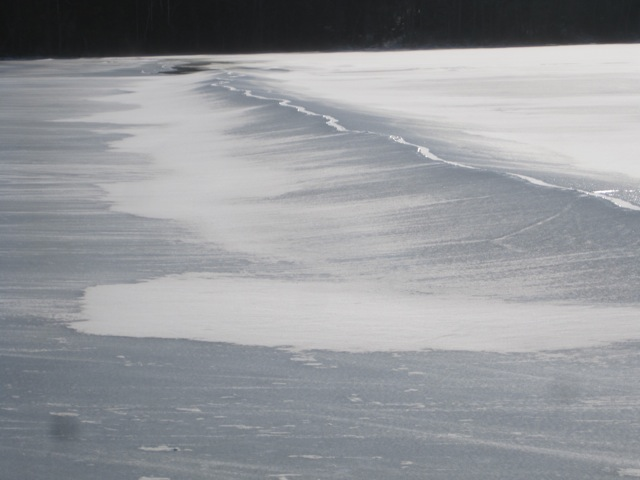
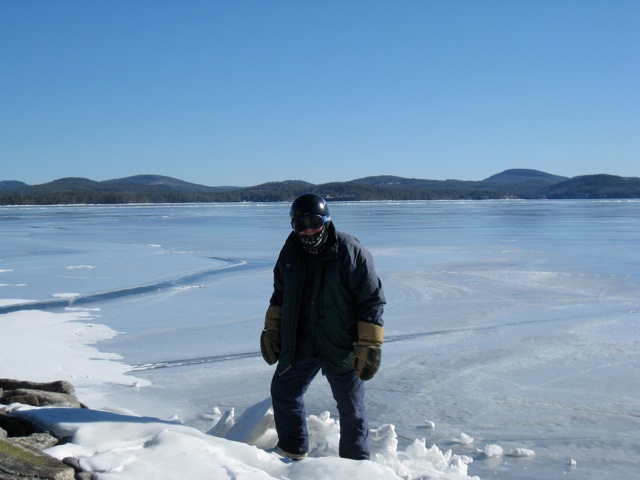
Scott Woodman reports from Dammy that it also has a thin coat of slush, no residual snow in sight.
A blast of Canadian cold air is needed, none forecast, just mid to high 20’s Tuesday and Wednesday nights, maybe that would do it. The second week of March, our traditional Spring ice week is just over the horizon. A Woodman report.

Posted in 2013 Season | Comments Off on Damariscotta Sun> Mar. 3

Runner Alignment

I strongly believe that definitive runner alignment should be done in the shop ONCE. Epoxy the chocks and chock bolts onto the plank forever. The business of alignment on the ice is frustrating and only good until the next heavy air when the chocks move again. The only use for on ice alignment checking is just that, checking, and is a waste of time if you did it right in the shop and glued them on. For checking unknown chocks some kind of rifle telescope on an aluminum plate grooved on a table saw is fine. Ice needs to be smooth. Make the plate long enough so that the mounted scope is far enough forward or aft and high enough to clear the plank. Sight on a distant building estimating an 8 foot distance between features on the building. In the shop I use a stick with 1/2 inch or larger aluminum rods 2-3
inches long at the ends, one fixed and the other sliding. Both rods are drilled end to end, the sliding one off center, 3/16 is fine, one is threaded and fastened to threaded rod screwed into the wood stick. The other end of the stick has smooth 3/16 rod glued or threaded into it, long enough to leave room for a dial indicator to be mounted on the stick or on the rod and measure to the 1/2 inch aluminum rod that is to slide on the 3/16 rod. The stick is of such length that the two 1/2 diameter aluminum pieces, lets call them spuds, ride on the edges pf the runners mounted in the chocks with the plank upside down. Give them each a whack with a hammer to make a groove that will slide along the runner edge (oiled). The runner edges need to be parallel and the plank ideally should be squished flat, but that is not necessary. The moveable spud should have a square smooth end where the dial indicator will ride to measure movement of the spud. Two people move the spuds back and forth, just the length of the chock is enough, and the excursion of the spud is measured.
At this point you will have drilled out the chock mounting bolts from 5/16 to at least 3/8 so the chocks can be rotated a bit into alignment, but no glue has been applied because if you need to drill out the bolt holes more to get aligned you will have fun drilling the epoxy filled holes.
The actual moving of the spuds back and forth and getting a reproducible reading of near or less than .001 inch on the indicator for alignment requires some patience, a definite learning curve is created by; the helper, the flexibility of the stick, looseness of the spud on its rod etc., if you believe in Zen, use it.
When alignment can be achieved take the chocks off, mix and thicken epoxy, apply to previously roughened chock surface that faces the roughened plank, fill bolt holes in the plank (put masking tape across bottome of holes so epoxy doesn’t run out until you are ready to quickly put in a bolt from underneath) and get it started up into the chock. Wear rubber gloves, this gets messy, the goal of the exercise is to get the oversize holes full of epoxy around the bolts and form epoxy bushings so they CAN’T MOVE EVER AGAIN. Gently tighten the bolts on the chock that won’t be moved, glue and apply the movable chock that will be adjusted, tighten bolts just finger tight. Get the measuring gear and fiddle with the moveable chock to make sure you have adjustment swing enough in each direction. If not loosen the “fixed” chock, adjust it, and proceed.
As you get to within a few thousandths of perfection tighten the bolts somewhat. When you get to the point that rotating or twisting the chock is chasing your tail, get close and then try differential tightening of the bolts, just a little at a time will get you to plus or minus .001 inch over the distance of travel of the length of the runner chock, the principal bearing area of the runners in light air, where the alignment means the most. Now you are done, pick up your gluey tools, lay the stick, spuds, etc aside, turn out the lights and walk away until tomorrow. The last thing you want to do is bump into a runner while the epoxy is half cured, LEAVE THE ROOM.
The bolts should not be cranked really tight, that just squeezes epoxy out of the joint, it needs to be there. Clean up the epoxy drools very carefully and gently before you leave the room, better you have some congealed drools the next day than knocking a chock out of alignment after all that work.
Obviously you are using your best runners, carefully profiled and sharp ready for the season to come. The real fuss pots make sure all their sets of runners have edges parallel to each other, another story.
This is not a job for coffee break, think 2-3 hours when you know what you are doing, plus the time to make the parts, set aside a day. Tools needed are a drill press, hack saw, files and square for making a flat end of the measuring spud, and lastly a dial indicator. A used tool place like Liberty Tool Shop in Liberty, Maine, usually has them for $10 or so. Liberty Tool has no phone, you have to go there, they don’t mail, they might have e mail or a web site. Anyway it is worth the trip, turn your significant other loose in the Liberty Graphics T shirt place across the street and see who can spend less money for stuff they didn’t know they needed. There is nothing else to do in Liberty but it is worth the trip. A friend of mine bought a small measuring tool in a wood case and found a diamond engagement ring in the bottom when he got home. He took it back and the shop owner said ” I don’t know where the stuff comes from, spread the word and keep the ring”.

Iceman

When you have come close to alignment within a few thousandths start tightening the chock bolts

Posted in 2013 Season | Comments Off on Runner Alignment

Cghickawaukee

The ice on Chickie remains in appearance only. It is about a foot thick and covered with varying color gray slush now streaky white but changing throughout the day. This junk is 1 1/2 inches deep and what seems to be hardish ice. As for the last few days I believe with 8-10 wind it could be sailed with plates it just needs someone with gumption to try it.
Suggest launching at public beach, parking lot there muddy. Lloyd’s beach is closed.

Iceman

Posted in 2013 Season, Uncategorized | Comments Off on Cghickawaukee

Chickawaukee Ice

Chickyice is graying out this morning. Who knows what this week’s forecast of unsettled weather will do, this is a good start.

Iceman

Posted in 2013 Season, Uncategorized | Comments Off on Chickawaukee Ice

Damariscotta Saturday

The snow came and went. The sun came and went. But the when the wind was switched on at 9:45 it settled in at 8-10kts from the ENE all day long. When we finally had all we could take at about three, it was still blowing. And because it stayed right around freezing all day, the ice stayed hard, and we discovered that the north end had the best ice of all, with very little shell, and dare I say, approaching the level of, oh, say, about 8?

One rambling fool just had to have a shot at the narrows, but the wind faded fast down there. You really need the NW to get through properly, so it was a bit of a walk on crusty snow back to good air. But remember how satisfying that first strong pull of the rig feels after a long slog of pushing? There’s no where else you’d rather be!

Our friends Denis and Francois from Quebec made a day trip, picking up a very nice older DN to add to the home fleet. Francois set it up and took off, winding it up
easily and giving Denis a run for his money. We hope they don’t have too nasty a slog home in this new snow storm.

Peter, from Massachusetts, showed up with this very clever DN trailer carrying the hull in the middle and all the gear in lockers along the side, with the mast on top in a bag.

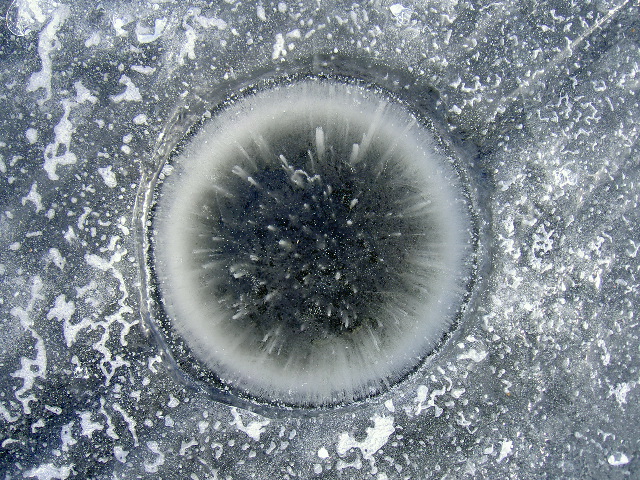
The good news in the weather is that this next spell promises a wintry mix, so whatever we get has the possibility to recover easily. There is over a foot of very nice ice out there; we inspected it through a kind ice fisherman’s hole. The first couple of inches are grey, and then black all the way to the bottom.

Is there any other good ice in New England? Fair ice? Lousy ice? We’ll sail on anything at this point!

Posted in 2013 Season, Uncategorized | Comments Off on Damariscotta Saturday